Ireland Trip April 2026
I am delighted to report that Hibernia Travel has successfully completed its first trip to Ireland!
In collaboration with Jewel Rozanski at Cultured Travel (https://culturedtravel.org/), we hosted 22 guests on the itinerary “Twentieth Century Irish History” from April 18 to 24. Apart from wonderful guests (many of whom knew each other from previous trips with Jewel), an excellent collaborator in Jewel (she helped us stay on schedule, and always with good cheer and a smile), and no unexpected glitches (nobody got sick or fell down!), we were blessed with glorious weather - not a single drop of rain the entire 8 days! And that was after almost daily rain and cold in February and March … which is why we picked April ;-). And this is also why we are planning our next trip in April 2027… but more about that later.
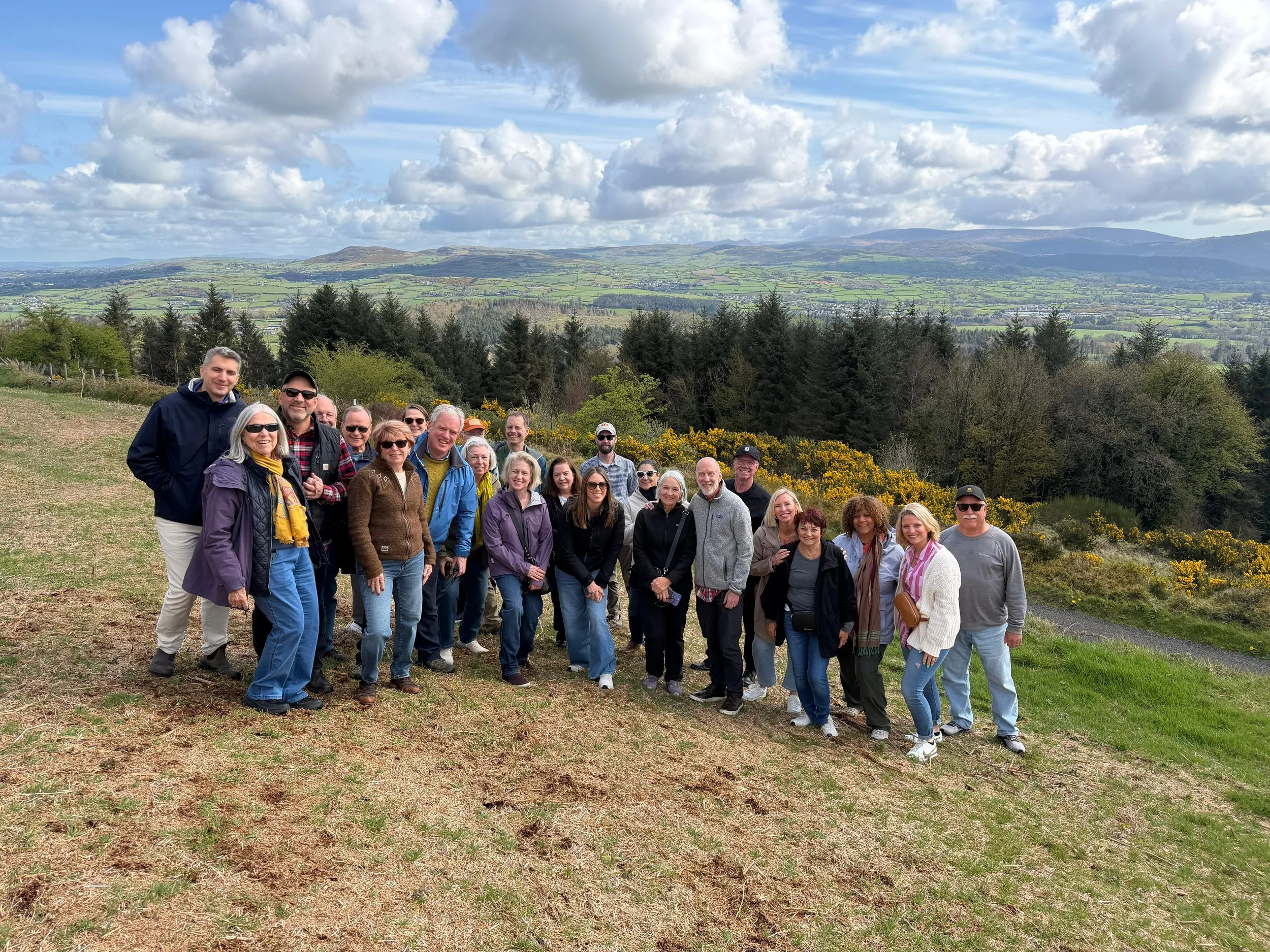
Our “Twentieth Century Irish History” itinerary focussed on Dublin and Belfast, with Robbie Campbell at Yellow Umbrella Tours (https://www.linkedin.com/in/robert-campbell-26043b11a/) providing the bus to take us between the cities. Robbie provided background stories, especially after we crossed the Border and exited the motorway to continue our trip to Belfast. We then found ourselves criss-crossing the meandering Border on what Robbie described as an “unapproved road” during The Troubles - a road that the British Army routinely destroyed to control IRA movement in the region, and which the locals (and the Provisional IRA, PIRA) would then repair. We stepped off the bus on a hillside overlooking Carlingford Lough to view the location of the single most successful attack by the PIRA on the British Army during The Troubles on August 27, 1979 - the same day that Lord Louis Mountbatten, the Queen’s cousin, was assassinated by PIRA in Co. Sligo.
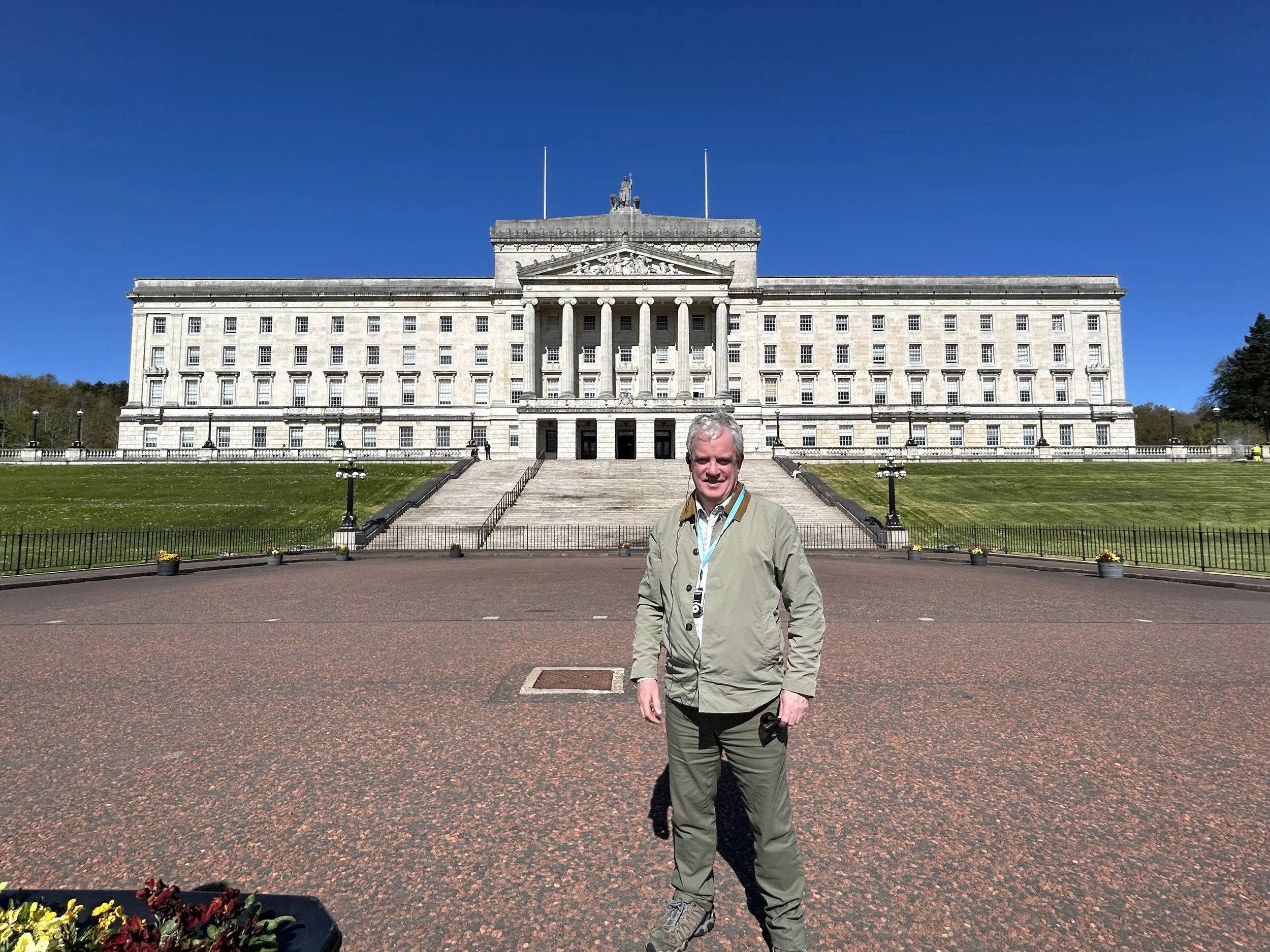
We stayed at The Europa Hotel in Belfast, reported by journalists during The Troubles as the most bombed hotel in Europe! From there we visited Titanic Belfast Museum (dedicated to the Harland and Wolff Shipyard where the Titanic was built), the Stormont Parliament Buildings (with its dramatic 1-mile driveway), and the Belfast Political Tour offered by Yellow Umbrella Tours.
Katy Hayward, Professor of Political Sociology at Queen’s University Belfast, spoke to us in the Europa Hotel on “The Future of Northern Ireland”, based on her research on attitudes in Northern Ireland to a United Ireland and other related questions.
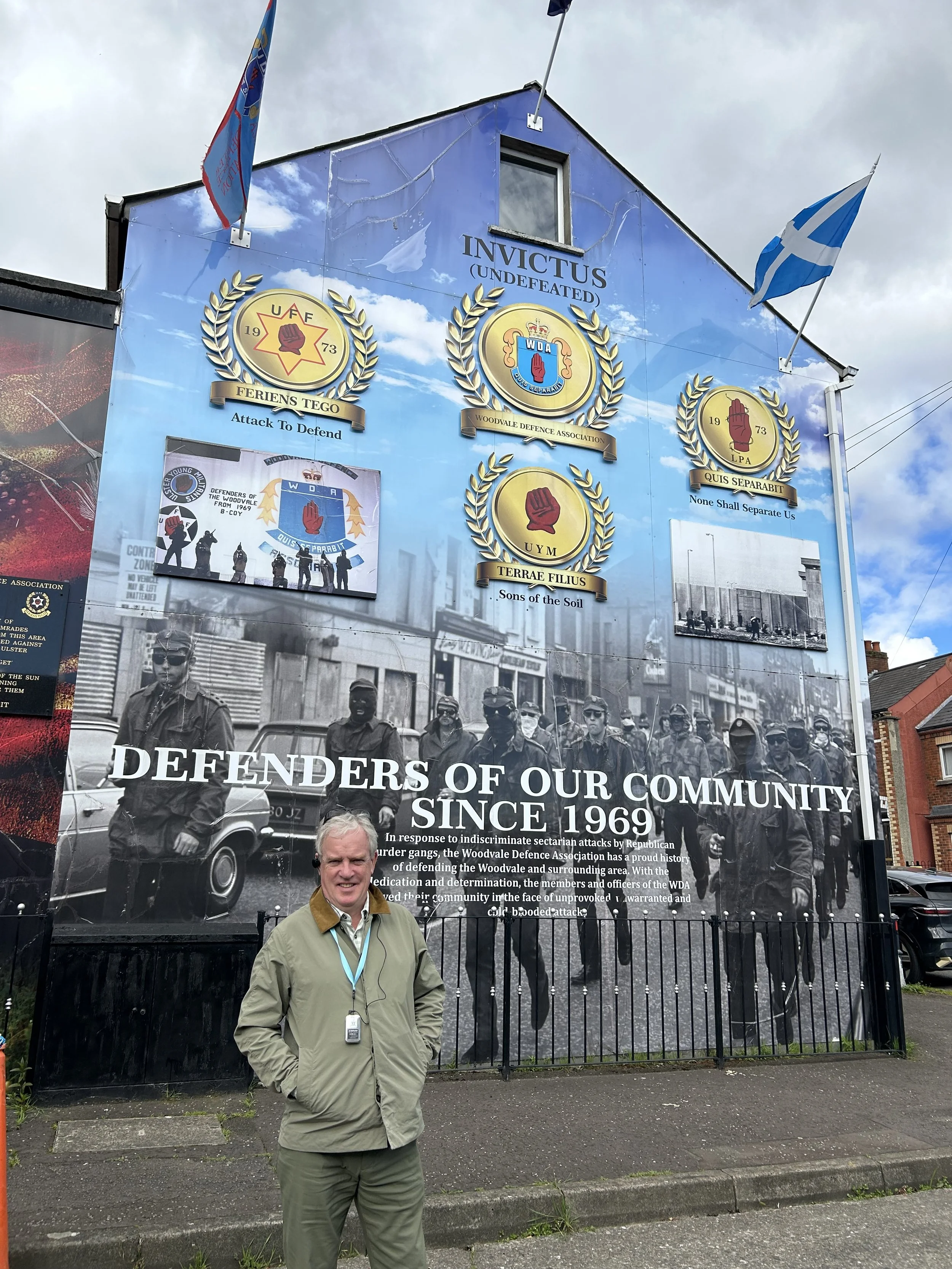
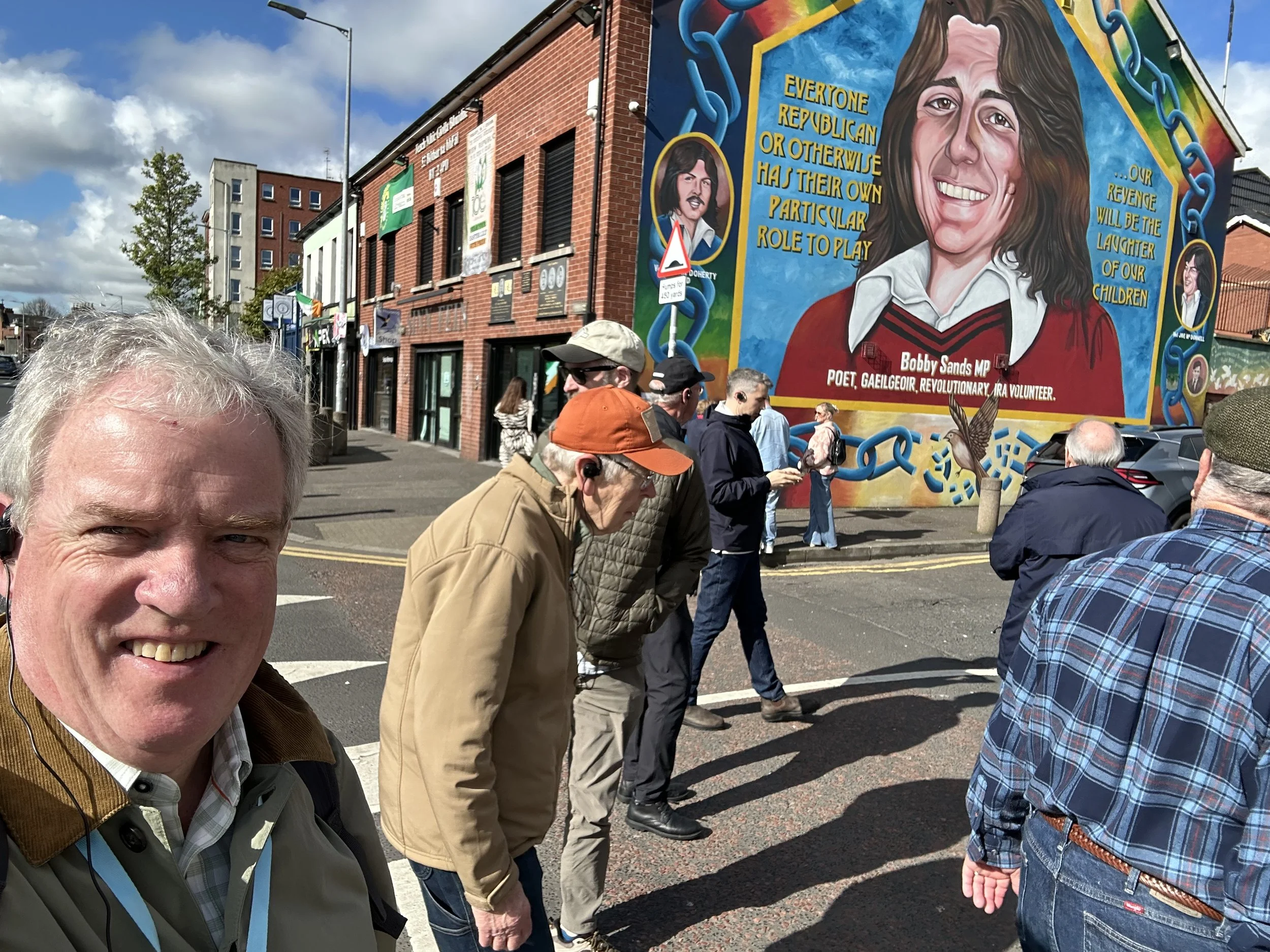
This last event involved a walk (and by bus in part) down the Falls Road with a former member of PIRA, describing the events of August 1969 when The Troubles are generally considered to have started. We then passed through the gates of the Peace Wall (a 10+ feet high barrier separating Catholic/Nationalist and Protestant/Loyalist adjoining neighborhoods in West Belfast) and toured the Shankill Road with a former member of the Ulster Volunteer Force (UVF). Both guides were reasonable in presenting “their side’ of the story, and both acknowledged their parts in The Troubles, though not the details. Both neighborhoods displayed partisan murals on gable ends of buildings, and memorials to fallen innocents and to members of PIRA and the UVF killed in action. We then repaired to an Irish language cultural center (Culturlann McAdam Ó Fiaich) on the lower Falls Road for lunch, groups of 6-7 of us sitting at tables with ladies who had lived through The Troubles … but, of course, given where we were, they were all Nationalists. Apart from the stories they told, I was struck by the emphasis on the Irish language in the center - this is an important part of the rise of Catholic/Nationalist power since the Good Friday Agreement of 1998.
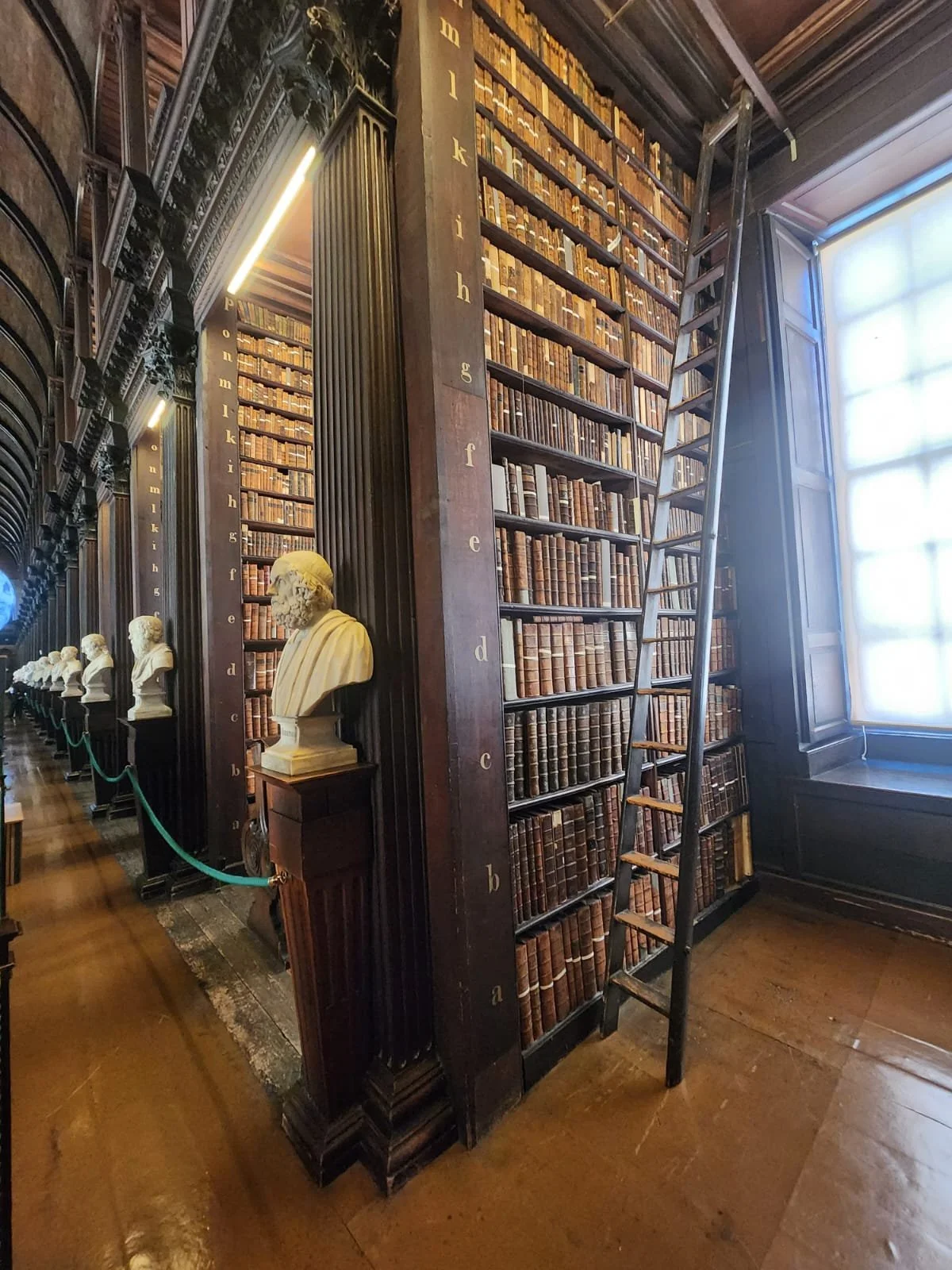
The next morning we explored Trinity College Dublin in the company of a young student lady from Roscommon (true to her major - acting - she was suitably animated and charming), then to the Book of Kells and the Great Library. Although not strictly relating to twentieth century Irish history, a visit to Trinity and the Book of Kells is de rigeur for Americans in Dublin. Following lunch at Kilkenny Design Center on Nassau Street, we hiked over to the EPIC Emigration Museum on the banks of the River Liffey, with me explaining the long history of emigration from Ireland (including my own in 1989) on the way using a Whisper wireless audio system provide by Jewel. The museum was quite crowded, and the guide, though knowledgeable and pleasant, rushed us through the various exhibition rooms - I suggest an unguided tour might have been better, as the exhibits are well documented.
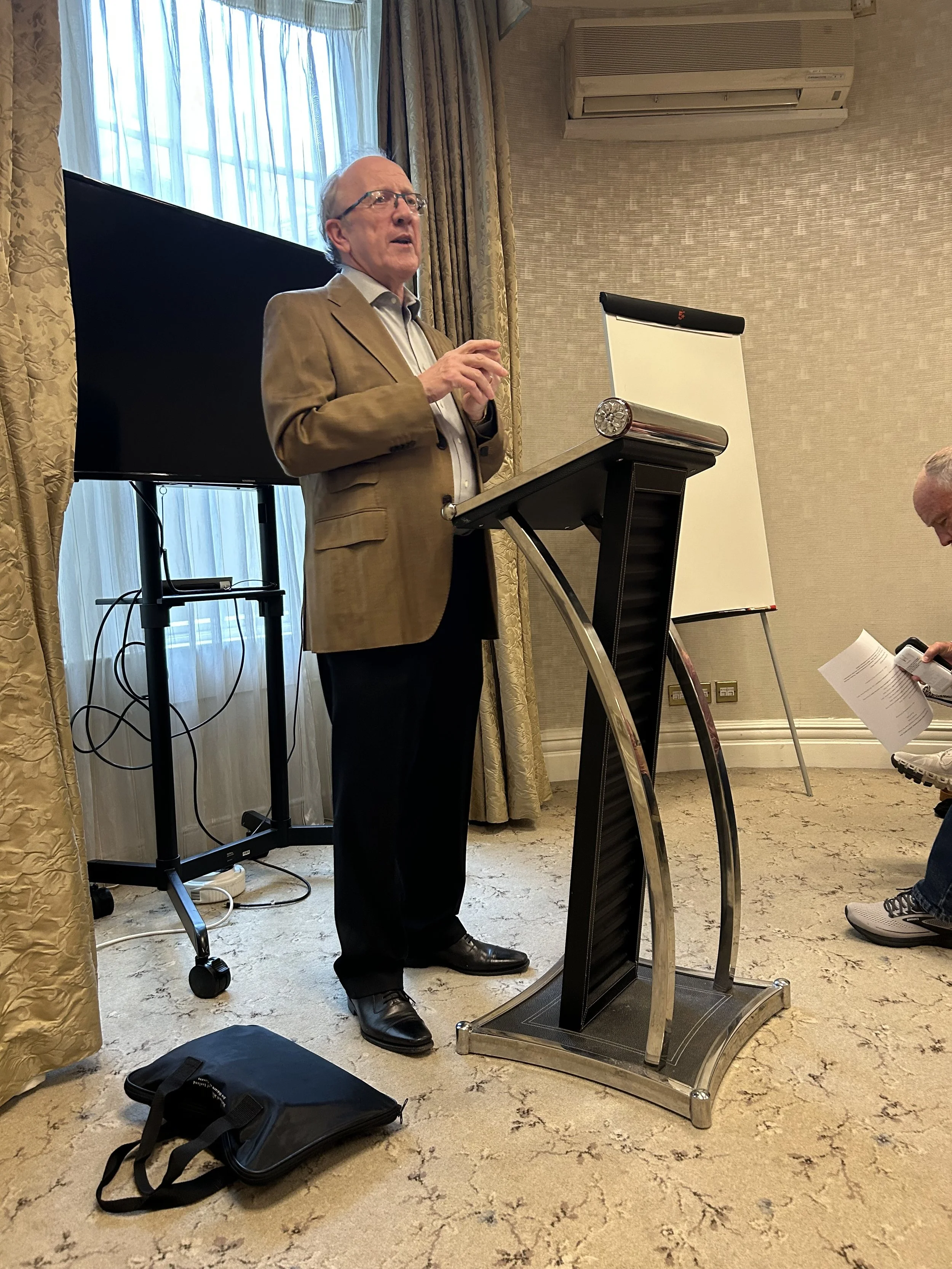
Gerry Whyte, Professor of Law at Trinity College Dublin, spoke to us in the evening on "Ireland’s Three Constitutional Orders Since 1919”, including highlighting of the US influence on the development of the Irish Constitution.
The following day we did a walking tour of Irish history, starting at the Wolfe Tone statue and Stephen’s Green. The guide - Darragh, from Historical Walking Tours of Dublin - was excellent: knowledgeable and very attentive and friendly, with a nice Dublin humor. He took us through Temple Bar, where we stopped at the plaque commemorating Frederick Douglas’s visit in 1845, then to Dublin Castle, finishing up at the GPO with stories of the 1916 Rising. After lunch at Arnott’s Department Store on Henry Street, we visited the GPO Museum, a small but very moving exhibition of that seminal moment in the fight for Irish freedom in April 1916.
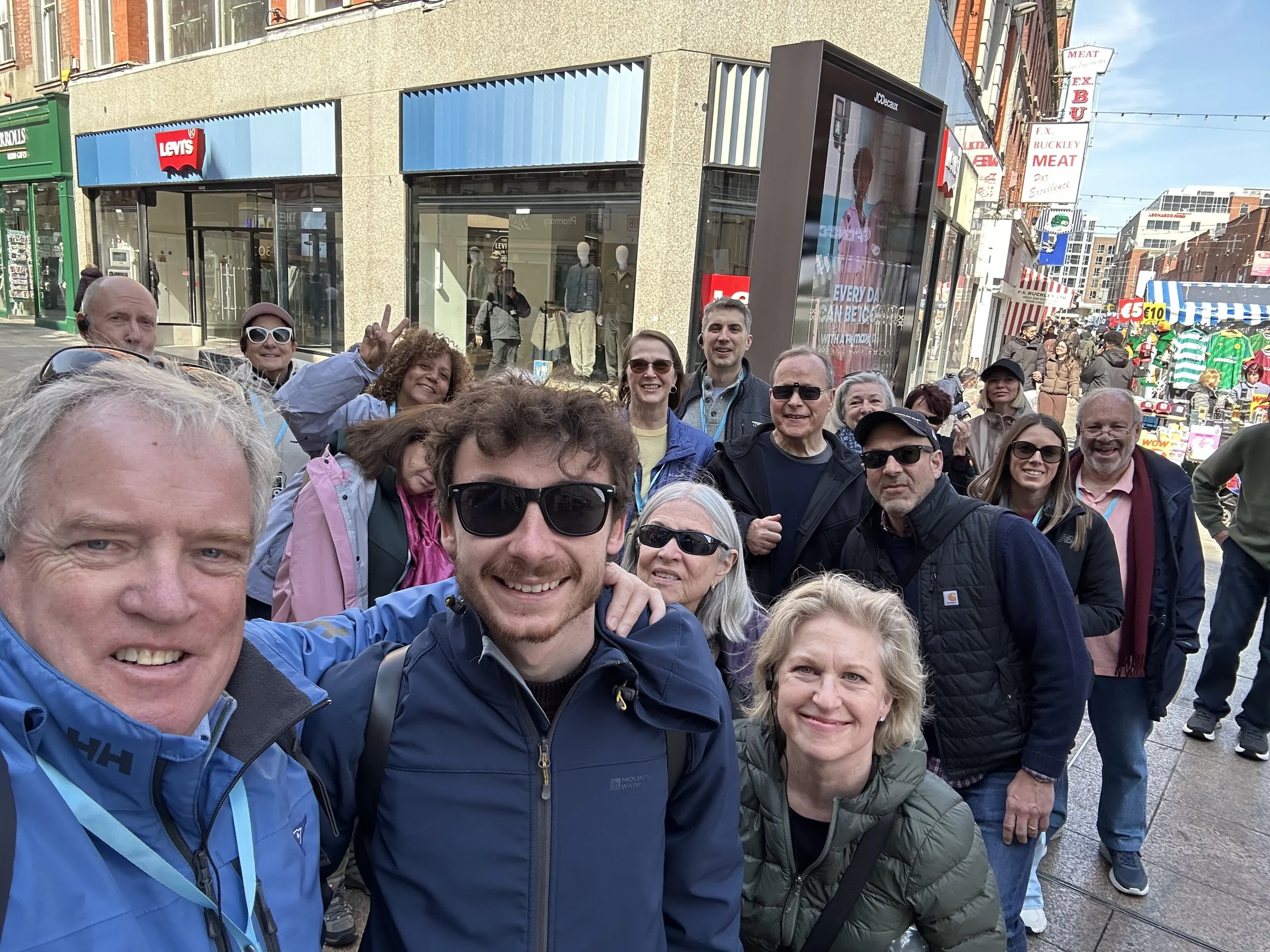
On the last day we visited the 14 Henrietta Street House Museum. This tour was perhaps the most educational in understanding what it was like to live in Dublin before and after the turn of the nineteenth century, and the contrast between the condition for the very rich and very poor.
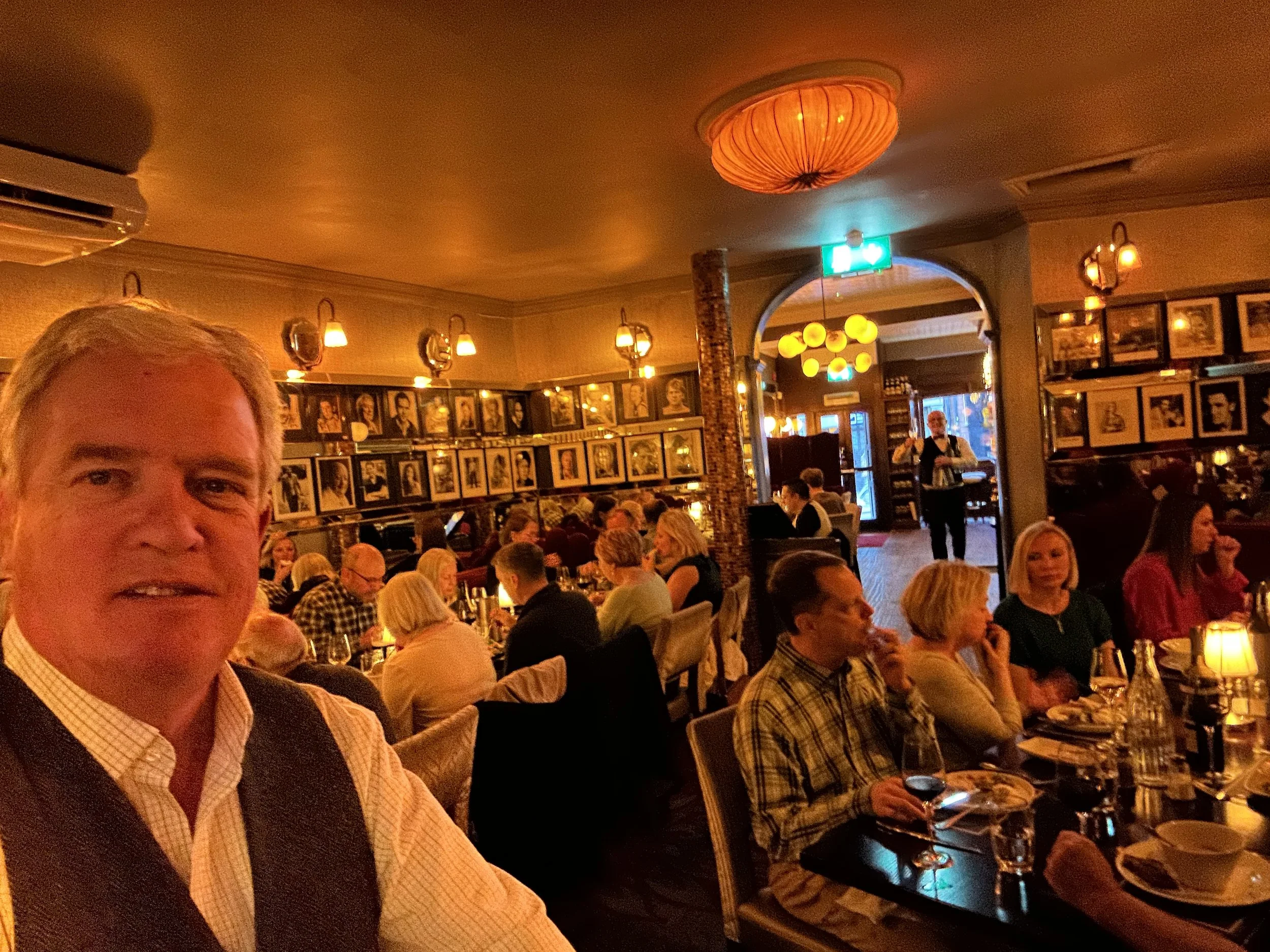
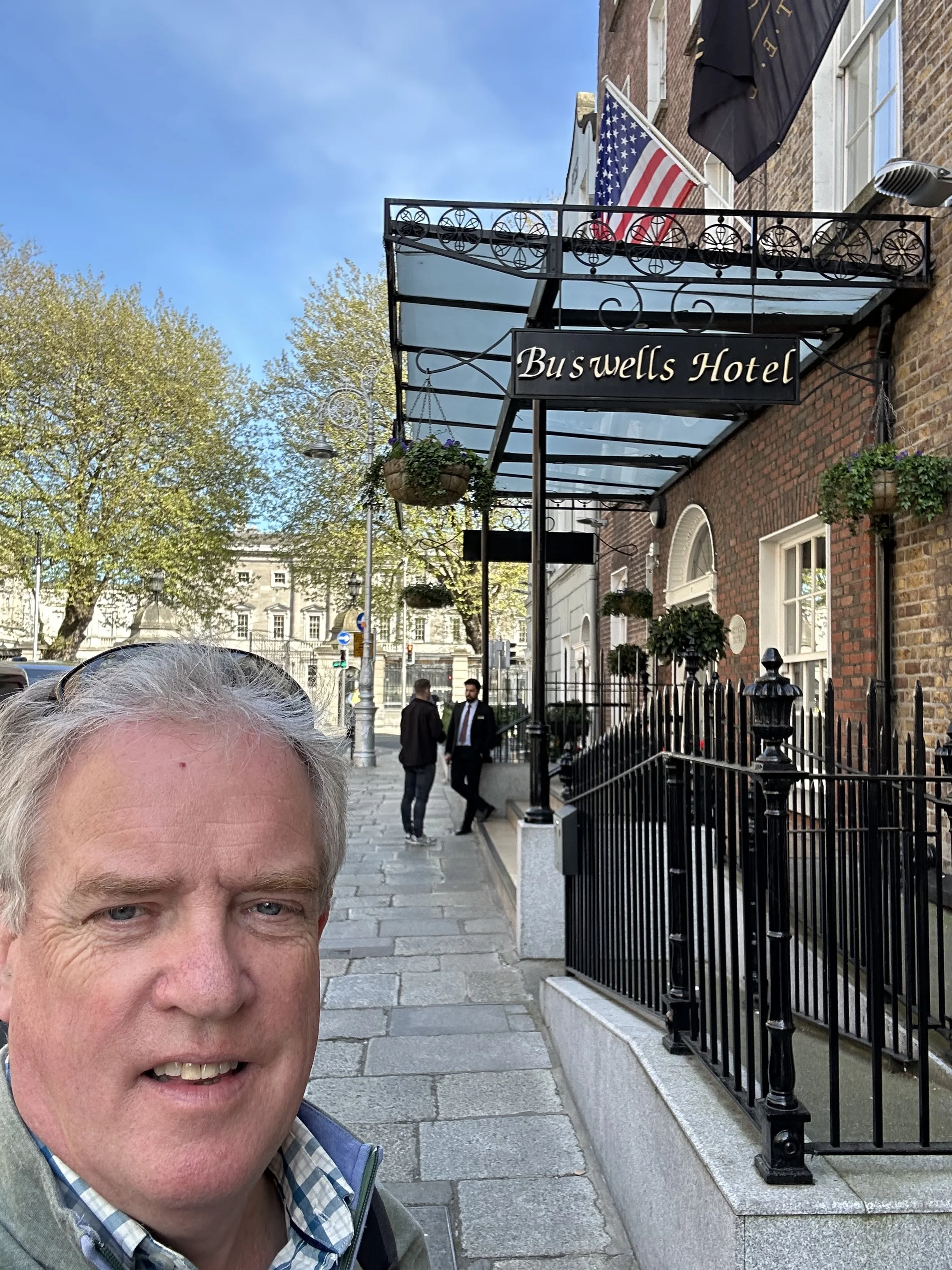
After an “free afternoon” to engage in some retail therapy, we gathered at the Trocadero Restaurant on St Andrew’s Street, just off Grafton Street, for a farewell dinner. This is one of my favorite restaurants in Dublin: a great mix of old-style white linen service and wonderful decor comprising hundreds of small photos of actors dotting gate walls. A final nightcap in the bar at Buswell’s rounded off a wonderful week in Dublin and Belfast … and without a drop of rain to spoil the party!